



In Japanese visual arts, packaging is celebrated not as a temporary barrier to be torn apart, but as a revered cultural medium of artistic expression, philosophical reverence, and emotional communion. While Western gift wrapping frequently relies on symmetrical boxes concealed beneath glossy paper and adhesive plastic bows, Japanese artisanal gift packaging draws profound inspiration from traditional ceremonial garments—most notably the graceful, multi-layered folds of the silk *Kimono*.
Kimono-inspired gift wrapping elevates standard rectangular boxes into breathtaking works of sculptural paper art. By introducing disciplined diagonal accordion pleats across the face of the package, the wrapping paper mimics the elegant, overlapping V-neck collar of a kimono robe. Wrapped around the waist of the package, a wide contrasting ribbon band functions as the ceremonial *Obi* sash, cinched with a delicate cord resembling the *Obijime*.
This exquisite design masterclass delivers the definitive guide to kimono inspired gift wrapping. You will master the geometry of diagonal origami paper pleats, understand crucial cultural etiquette regarding flap overlap orientation, learn how to fold functional gift card pockets into the paper, and style contrasting Obi ribbon sashes that leave recipients in awe.
Cultural Etiquette and The Architecture of the Kimono Silhouette
Understanding the cultural symbolism behind traditional garment folds.
The Non-Negotiable Left-Over-Right Overlap
When executing kimono-style gift wrapping, adherence to traditional Japanese cultural etiquette is paramount. When draping a living person in a kimono, the left front panel is always wrapped over the right front panel (*yaminori*).
In Japanese tradition, wrapping right-over-left is practiced exclusively when dressing deceased bodies for Buddhist funeral burials. Violating this rule in gift presentation is considered a profound omen of misfortune. Caretakers must always ensure that the left folded paper flap crosses over the right flap on the front of the package.
The Functional Origami Pocket Pleat
The distinguishing visual hallmark of kimono wrapping is a series of three to five diagonal pleats that cascade across the upper-right corner of the box. These stepped pleats mimic the layered silk collars of an elaborate formal robe.
Beyond their breathtaking visual elegance, these folded pleats create functional, hollow diagonal pockets. Gift-givers can slide a flat handwritten greeting card, a decorative monetary envelope, or a pressed botanical sprig directly into the pleat, integrating the greeting seamlessly into the packaging.
Origami Paper Pleating Mechanics: Step-by-Step Scoring
Transforming flat wrapping paper into stepped accordion collar folds.
Calculating Paper Dimensions and Angle Orientation
Kimono wrapping requires a larger paper sheet than conventional wrapping—typically 1.5 times the standard width to accommodate the paper consumed by the pleats. Select high-quality wrapping paper with substantial fiber body, such as authentic mulberry *Washi*, heavy textured kraft, or luxury matte gift wrap.
Lay the paper face down on your cutting mat. Measure approximately one-third of the way across the sheet and mark a diagonal guideline at a 45-degree angle. This line establishes the primary trajectory of your collar pleats.
Scoring and Pressing Stepped Accordion Pleats
Using a metal ruler and a bone folder, score three parallel diagonal lines spaced exactly 1 inch (2.5 cm) apart. Fold the first scored line upward to create a 1/2-inch raised pleat, burnishing the fold firmly.
Repeat this motion for the second and third score lines, creating three uniform, overlapping, stepped diagonal ridges that cascade like stairs. Apply small strips of double-sided tape beneath the underside of the pleats to permanently lock them flat before encapsulating the gift box.
Styling the Obi Sash and Obijime Cord Accents
Replicating ceremonial kimono sash hardware with layered ribbons.
The Wide Contrast Obi Sash Band
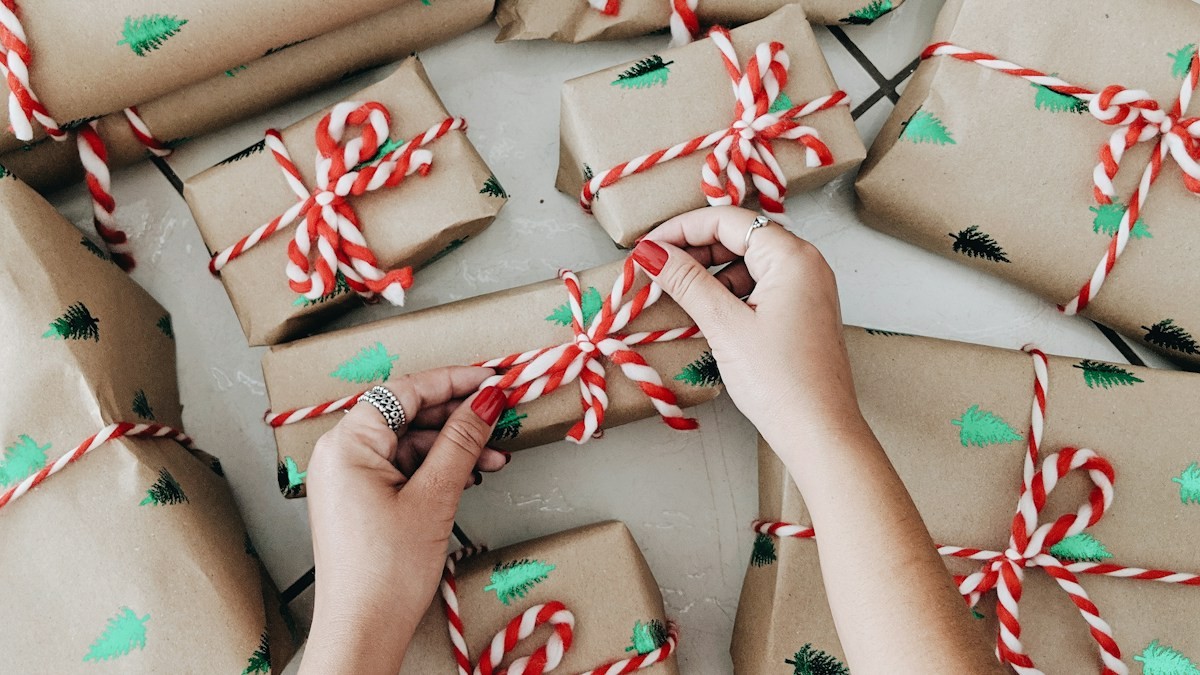
In traditional dress, the kimono is held closed by the *Obi*—a wide, stiff, decorative sash wrapped around the waist. In package styling, select a wide 2-inch to 2.5-inch ribbon in a striking contrast color (such as metallic gold brocade, deep midnight navy satin, or patterned silk).
Wrap this wide ribbon tightly around the horizontal waist of the box, positioned directly across the lower base of the diagonal pleats. Anchor the ends neatly at the back with permanent double-sided tape; this cleanly conceals the bottom of your origami folds while framing the package with regal structure.
The Obijime Cord and Floral Sprig Embellishment
To complete the haute couture ensemble, layer a narrow 1/8-inch metallic gold twisted cord or thin satin ribbon (representing the *Obijime*) directly down the center of the wide Obi sash. Tie a traditional flat square knot (*Ma-Musubi*) at the exact center of the front waist.
Tuck a single sprig of dried cherry blossom, autumn maple leaf, or baby’s breath into the diagonal collar pleat. The finished package is not merely a wrapped box; it is an unforgettable cultural masterpiece of origami precision and textile grace.
Kimono Wrap Element & Cultural Translation Guide
| Kimono Element | Packaging Translation | Ideal Material / Width | Cultural Aesthetic Function |
|---|---|---|---|
| Eri (Collar) | Diagonal Origami Pleats | Scored 70lb Washi / Matte Wrap | Simulates layered silk kimono neckline |
| Yaminori (Overlap) | Left flap folded over right | Precision folded box edges | Non-negotiable cultural etiquette for life |
| Obi (Waist Sash) | Wide contrast belly band | 2.0″ to 2.5″ Satin / Brocade | Cinches waist & anchors pleat bottoms |
| Obijime (Sash Cord) | Narrow central cord / tie | 1/8″ Twisted gold cord | Traditional decorative knot closure |
| Kanzashi (Hairpin) | Tucked botanical sprig | Dried blossom or cedar sprig | Seasonal nature appreciation (Kigo) |
Recommended Further Reading & Authoritative References
To deepen your practical mastery of these concepts, explore our comprehensive analyses on furoshiki fabric gift wrapping and Japanese zero-waste principles and traditional Japanese gift wrapping clean folds and minimalist accents. For official technical standards, peer-reviewed benchmarks, and industry guidelines, consult the Japan Guide: Traditional Kimono Culture, Anatomy, and History.
Advanced Implementation Strategies and Field Best Practices for Kimono Inspired Gift Wrapping
When implementing these methods in real-world scenarios, consistency and continuous observation serve as the primary determinants of long-term success. Experienced practitioners recognize that theoretical frameworks must be adjusted to account for subtle environmental variables, microclimate fluctuations, and individual behavioral variations. Establishing a disciplined monitoring log allows you to identify subtle trend shifts early, long before minor discrepancies escalate into systemic issues.
Furthermore, avoiding common beginner pitfalls requires a firm adherence to validated core principles rather than adopting transient shortcuts or unverified commercial gimmicks. Integrating periodic structural audits—whether assessing substrate integrity, water chemistry equilibrium, physical mechanical wear, or nutritional bioavailability—guarantees that every safeguard remains fully operational. By prioritizing holistic wellbeing and systematic execution, you establish an environment of enduring stability, resilience, and superior measurable outcomes.
Frequently Asked Questions
Can I use double-sided wrapping paper for kimono-style gift wrapping?
Yes! Double-sided wrapping paper (with a solid color on one side and a complementary pattern on the reverse) is spectacular for kimono wrapping, as each diagonal pleat fold naturally reveals the contrasting reverse design!
How do I keep the pleats from popping open when wrapping the box?
Place thin strips of permanent double-sided tape inside the inner fold of each pleat before wrapping the paper around the box. This locks the accordion pleats flat and prevents them from shifting.
What size box works best for kimono-inspired wrapping?
Flat rectangular boxes—such as apparel boxes, large book boxes, or shallow jewelry presentation cases—work best. Tall cubes make it difficult to balance the diagonal collar angle.
Can I attach a gift tag to a kimono wrap?
Rather than sticking a commercial adhesive tag on the paper, slide a beautiful calligraphed card or luggage-style gift tag with a gold string directly into the diagonal collar pleat pocket.