



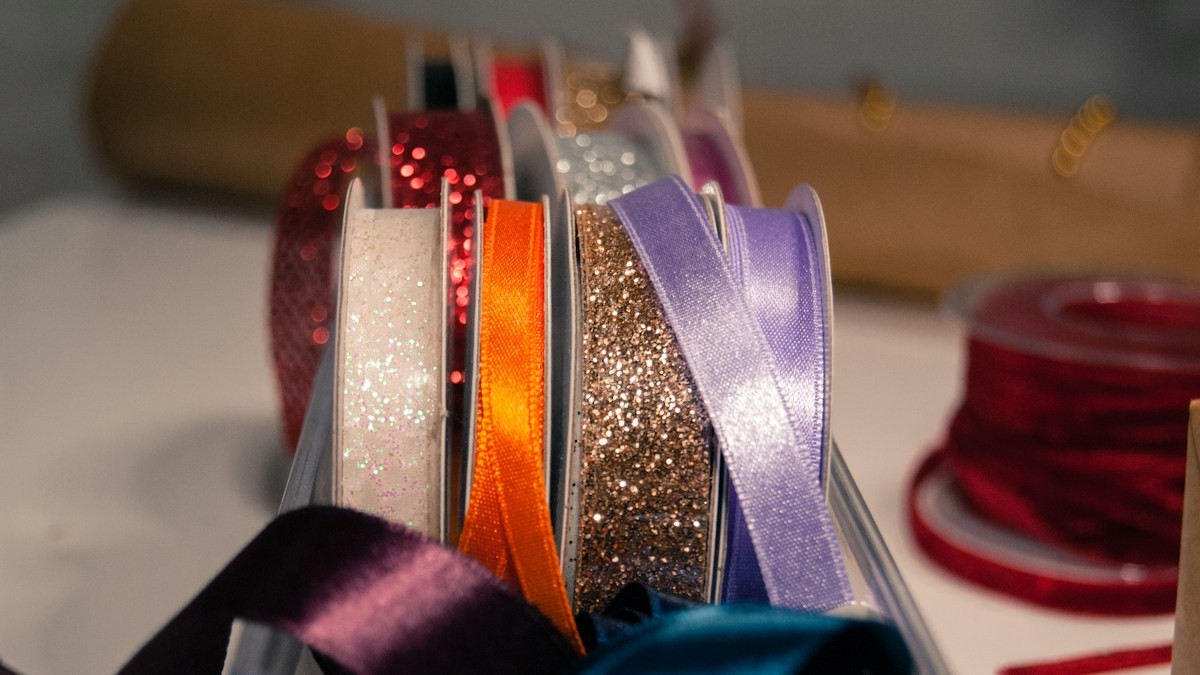
In the vast disciplines of textile design, fashion tailoring, floral craft, and luxury packaging, ribbon is often treated as a simple decorative embellishment. Yet beneath its colorful exterior lies a sophisticated world of material science, fiber engineering, and centuries of weaving history. Walking into a specialty ribbon atelier reveals an astonishing diversity of textures—from the crisp, ribbed ruggedness of grosgrain and the liquid, mirror-smooth gloss of satin to the decadent, light-absorbing pile of velvet and the papery, architectural rustle of taffeta.
Selecting the incorrect ribbon weave for a project is one of the leading causes of crafting failure. A bow that requires crisp, upright structural volume will droop helplessly if fashioned from fluid, slippery satin; conversely, an elegant bridal bouquet drape will look stiff, awkward, and rigid if tied with heavy grosgrain. Mastering ribbon craft begins with understanding how warp and weft yarns interact, how synthetic versus natural polymers behave under stress, and how surface friction dictates knot security.
This comprehensive textile reference manual provides an in-depth breakdown of ribbon material weaves explained. We analyze the microscopic weave architecture of the five major ribbon families, compare polyester vs. silk polymer performance, evaluate tensile strength and knot retention, and provide a definitive decision matrix that guarantees you select the perfect textile for every creative endeavor.
Grosgrain and Taffeta: High-Friction Structural Ribs and Crisp Plain Weaves
Understanding how ribbed cords and balanced plain weaves deliver mechanical durability.
The Engineering of Grosgrain (The Ribbed Workhorse)
Pronounced ‘grow-grain’ (from the French *gros grain*, meaning coarse grain), grosgrain is defined by heavy, distinct transverse horizontal ridges running across its width. These ribs are created by utilizing fine warp threads interwoven tightly around thick, heavy weft filler cords.
This structural corded weave imparts extraordinary mechanical tensile strength, high tear resistance, and high surface friction. Because the horizontal ridges grip against one another, grosgrain knots never slip loose, making it the premier choice for athletic medal ribbons, watch straps, and children’s hair accessories.
Taffeta: The Crisp Architectural Plain Weave
Taffeta is a fine, tightly woven plain-weave fabric with equal warp and weft density. Its hallmark characteristic is its stiff, crisp ‘hand’ and distinctive musical rustle (known in textiles as *scroop*).
Unlike fluid satin, taffeta holds sculptural geometric creases effortlessly without requiring embedded metal wires. It is favored by high-end milliners and holiday decorators for creating large, dramatic, architectural bow structures that maintain their shape in humid environments.
Satin and Velvet: Optical Sheen and Luxurious Cut-Pile Dynamics
How floating yarns and upright pile tufts manipulate light reflection.
The Physics of Satin Floats
Satin is not a raw fiber; it is a fundamental weaving technique. In a true satin weave, four or more warp yarns float over a single weft yarn (or vice versa), minimizing interlacing points.
These long, uninterrupted ‘floats’ create an unbroken, mirror-like surface that reflects light with extraordinary brilliance, giving satin its signature liquid sheen and silky, supple drape. However, because floating threads are exposed, satin is vulnerable to snags, water spots, and friction abrasions, making it best suited for luxury gift boxes, bridal attire, and tailored Dior bows.
Velvet: The Art of the Dual-Cloth Cut Pile
True woven velvet ribbon is among the most complex textiles in existence, produced on specialized double-cloth looms where two layers of fabric are woven simultaneously with an interwoven vertical pile yarn connecting them. A reciprocating knife slices between the two layers, creating two identical ribbons with millions of upright cut-pile fibers.
These microscopic vertical tufts trap and absorb light, producing unmatched color depth and rich, plush tactile warmth. Velvet adds dramatic opulence to winter holiday decor, bridal bouquets, and vintage millinery.
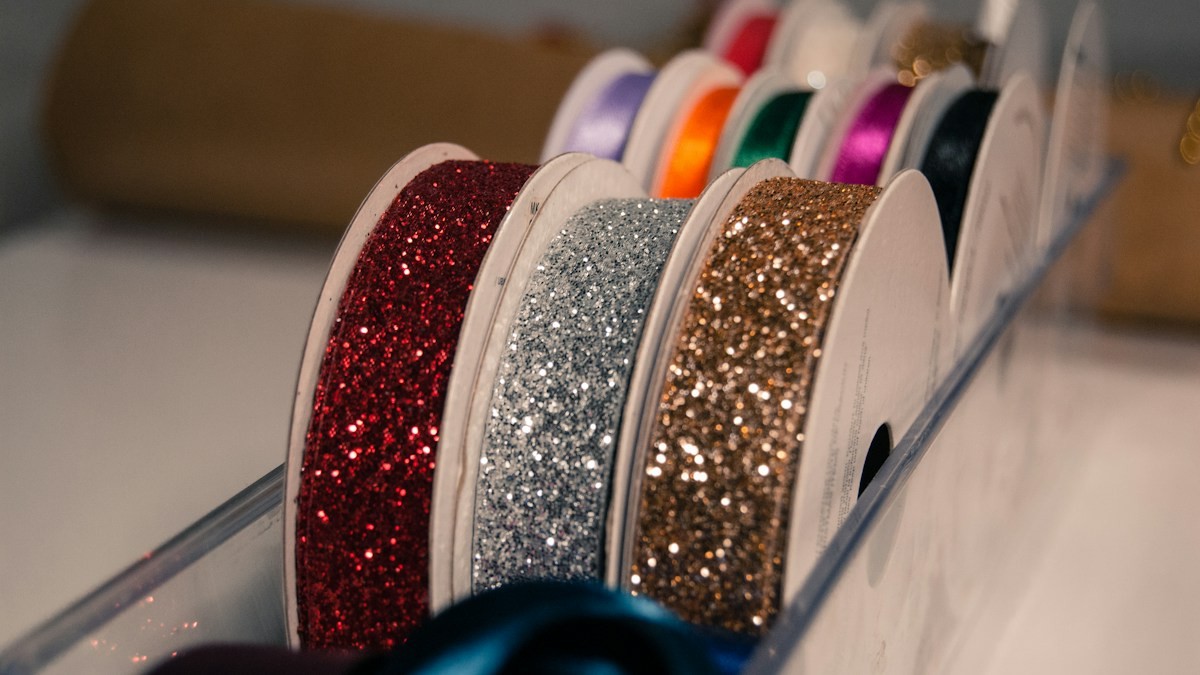
Fiber Chemistry: Polyester vs Silk vs Cotton and Rayon
Evaluating synthetic resilience against natural organic drape.
Polyester: The Indestructible Modern Standard
Over 90% of modern commercial ribbons are extruded from high-tenacity polyester (*polyethylene terephthalate*). Polyester offers unmatched colorfastness, high tensile strength, resistance to mold, and complete washability.
Crucially, polyester ribbons can be thermally heat-sealed with a flame to permanently lock raw cut edges, a physical property impossible with natural organic fibers.
Silk and Cotton: Organic Softness and Hand-Dyed Character
For heirloom bridal design and luxury packaging, natural mulberry silk and hand-loomed organic cotton remain unmatched. Silk possesses a delicate, whisper-soft hand and subtle natural shimmer that synthetic fibers cannot fully replicate.
Raw-edge silk chiffon ribbons with hand-frayed borders create dreamy, ethereal cascading streamers for bridal bouquets, moving organically with the slightest breeze.
Comprehensive Ribbon Weave Comparison & Specification Guide
| Weave Type | Surface Texture | Optical Sheen | Structural Rigidity | Best Design Application |
|---|---|---|---|---|
| Grosgrain | Heavy transverse horizontal ribs | Matte / Low Luster | High (Stiff & durable) | Hair bows, lanyards, medal bands |
| Single-Faced Satin | Smooth front, dull matte back | High mirror gloss | Low (Supple & fluid) | Gift wrapping, budget packaging |
| Double-Faced Satin | Smooth glossy on both sides | Luxurious liquid sheen | Moderate (Rich drape) | Bridal bouquets, tailored Dior bows |
| Woven Velvet | Dense, plush upright cut pile | Deep light-absorbing luster | Moderate to High | Holiday wreaths, winter fashion |
| Crisp Taffeta | Smooth, tight plain weave | Subtle shimmering sheen | Very High (Papery crisp) | Grand architectural bows, tree toppers |
| Sheer Organza | Transparent open mesh weave | Sparkling / Translucent | Low to Moderate | Layered accents, corsages, favors |
Recommended Further Reading & Authoritative References
To deepen your practical mastery of these concepts, explore our comprehensive analyses on wired edge ribbon selection and structural floral bow mechanics and double-faced satin ribbon tailoring and French couture flat bows. For official technical standards, peer-reviewed benchmarks, and industry guidelines, consult the Wikipedia Comprehensive Textile Science: Ribbon Weaves and History.
Advanced Implementation Strategies and Field Best Practices for Ribbon Material Weaves Explained
When implementing these methods in real-world scenarios, consistency and continuous observation serve as the primary determinants of long-term success. Experienced practitioners recognize that theoretical frameworks must be adjusted to account for subtle environmental variables, microclimate fluctuations, and individual behavioral variations. Establishing a disciplined monitoring log allows you to identify subtle trend shifts early, long before minor discrepancies escalate into systemic issues.
Furthermore, avoiding common beginner pitfalls requires a firm adherence to validated core principles rather than adopting transient shortcuts or unverified commercial gimmicks. Integrating periodic structural audits—whether assessing substrate integrity, water chemistry equilibrium, physical mechanical wear, or nutritional bioavailability—guarantees that every safeguard remains fully operational. By prioritizing holistic wellbeing and systematic execution, you establish an environment of enduring stability, resilience, and superior measurable outcomes.
Frequently Asked Questions
What is the difference between single-faced satin and double-faced satin?
Single-faced satin is woven with the glossy satin float structure on one side only, leaving the reverse side dull and matte. Double-faced satin features two sets of floating warp threads, creating an identical mirror-smooth luster on both sides.
Why does my ribbon fray into long threads when I cut it?
Fraying occurs when the cut edge is left unsealed, allowing the perpendicular weft threads to slide off the warp fibers. Prevent fraying by cutting at a 45-degree angle with sharp shears and passing the cut edge quickly near a flame (for synthetics) or applying clear fabric sealant.
Can I wash and dry clean velvet ribbon without ruining the pile?
True woven velvet ribbon should be dry cleaned or delicately spot-cleaned with a damp cloth. Never machine wash or vigorously rub wet velvet, as this permanently crushes the delicate upright pile tufts.
What does ribbon ‘number size’ mean (e.g., #3, #9, #40)?
Ribbon numbering is a historic floral trade sizing system: #3 equals 5/8 inch (16mm), #9 equals 1.5 inches (38mm), and #40 equals 2.5 inches (63mm).